
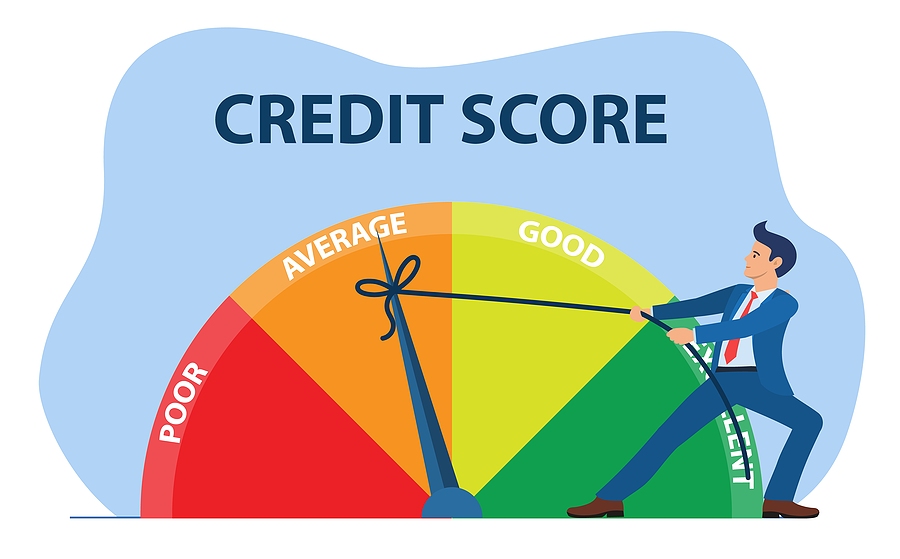
A low credit score can make it difficult to obtain finance through traditional banks. Many Australian borrowers assume that once their credit file has been damaged, their borrowing options disappear altogether.
In reality, that’s often not the case.
Private lenders typically assess applications differently from banks. While credit history may still be considered, it is rarely the only factor used when making a lending decision.
Instead, private lenders often focus on the broader financial picture, including property equity, available security, repayment plans, business performance and the strength of the borrower’s exit strategy.
For Australian business owners, property investors and self-employed borrowers, this approach can open doors that may otherwise remain closed through traditional banking channels.
In this guide, we’ll explain exactly what private lenders assess instead of relying primarily on your credit score, how approvals work and what you can do to improve your chances of securing finance.
✅ Quick Answer
Private lenders generally look beyond your credit score and focus more on factors such as property security, available equity, income, assets, business performance and how the loan will ultimately be repaid.
A poor credit score doesn’t automatically mean a loan will be declined, particularly where strong security and a clear exit strategy exist.
Table of Contents
- Why Banks Focus So Heavily on Credit Scores
- How Private Lending Differs
- What Private Lenders Look At Instead
- Property Equity and Security
- Exit Strategies Explained
- Income and Cash Flow Assessment
- Business Performance Indicators
- Asset-Based Lending
- Common Credit Issues Private Lenders May Consider
- Real Australian Examples
- How to Improve Your Approval Chances
- Common Mistakes to Avoid
- Expert Tips
- Frequently Asked Questions
- Final Summary
- Call to Action
Why Banks Focus So Heavily on Credit Scores
Traditional banks use strict lending models designed to manage risk across large numbers of applications.
Credit scores help banks quickly assess:
- Previous repayment history
- Defaults and judgments
- Credit enquiries
- Existing debts
- Financial behaviour
For many banks, a poor credit score can significantly reduce approval prospects.
Banks also operate under extensive lending policies and risk frameworks. For consumer credit, lenders must comply with responsible lending obligations that require them to assess whether a credit contract may be unsuitable for a borrower. ASIC provides guidance regarding these requirements. [asic.gov.au], [asic.gov.au]
Private lenders often take a more individual approach.
How Private Lending Differs
Private lenders generally assess the entire financial situation rather than relying primarily on a single numerical score.
Their focus is often:
- Security first
- Exit strategy second
- Credit history third
This means borrowers with:
- Recent defaults
- ATO debt
- Irregular income
- Self-employment income
- Limited trading history
may still have finance options available.
Borrowers seeking Private Mortgage Loans Australia | Fast Property Equity Finance often find that available equity can be more influential than their credit score alone.
💡 Did You Know?
Many borrowers using private lending have experienced short-term financial setbacks rather than ongoing financial difficulties.
Private lenders often look at current circumstances and future repayment capacity rather than focusing solely on past events.
What Do Private Lenders Look At Instead of Your Credit Score?
Let’s examine the key assessment factors.
Property Equity Often Matters Most
For many private lenders, equity is one of the most important considerations.
Equity is the difference between:
Property Value – Debt Secured Against Property
Example
| Property Value | Existing Debt | Available Equity |
|---|---|---|
| $900,000 | $450,000 | $450,000 |
The larger the available equity position, the lower the risk may appear to the lender.
This is why many borrowers use property equity finance solutions when traditional banking options are limited.
Why Equity Is Important
Property equity may:
- Reduce lender risk
- Support larger loan amounts
- Improve approval prospects
- Assist with urgent finance needs
Strong equity can often outweigh minor credit concerns.
Security Property Quality
Private lenders don’t just look at equity.
They also assess the security property itself.
Factors commonly reviewed include:
Location
Properties in major metropolitan areas are generally easier to assess and sell if needed.
Property Type
Examples include:
- Residential homes
- Investment properties
- Commercial properties
- Industrial properties
Marketability
The easier the property is likely to be sold, the more attractive it may be to a lender.
🟩 Quick Answer Box
Many private lenders ask:
- What property is available as security?
- How much equity exists?
- How will the loan be repaid?
These questions are often more important than the borrower’s credit score.
Exit Strategy: One of the Most Important Factors
An exit strategy explains how the loan will eventually be repaid.
Private lenders place significant importance on this.
Common exit strategies include:
- Property sale
- Business revenue growth
- Asset sale
- Refinancing to a mainstream lender
- Settlement of legal matters
- Future investment proceeds
A strong exit strategy demonstrates planning and reduces lender uncertainty.
✅ Expert Tip
Borrowers who clearly explain how they intend to repay the loan often receive stronger consideration than borrowers who simply focus on obtaining approval.
Income Still Matters
Contrary to popular belief, private lenders do not ignore income altogether.
However, they may assess income differently.
They often consider:
- Salary income
- Business income
- Rental income
- Contract income
- Self-employed earnings
Unlike banks, private lenders may be more comfortable with non-traditional income sources.
This flexibility can be valuable for:
- Contractors
- Sole traders
- Business owners
- Property investors
Business Cash Flow and Financial Performance
For business borrowers, lenders frequently review cash flow performance.
Common considerations include:
- Revenue levels
- Profitability trends
- Outstanding invoices
- Existing liabilities
- Customer concentration
Businesses experiencing temporary cash flow pressure may utilise Invoice Finance Australia | Invoice Factoring & Cash Flow Funding to access capital tied up in unpaid invoices.
Rather than relying solely on credit scores, invoice finance providers often assess invoice quality and debtor strength.
Assets Beyond Property
Some lenders assess the broader asset position of a borrower.
This may include:
- Commercial equipment
- Vehicles
- Investment portfolios
- Business assets
- Cash reserves
A strong asset position can significantly strengthen an application.
Loan Purpose
Lenders want to understand exactly why funds are required.
Common purposes include:
- Working capital
- Property purchase
- Business expansion
- Tax debt payment
- Debt consolidation
- Settlement funding
Borrowers who present a clear and logical purpose typically help lenders form a more accurate risk assessment.
Borrower Experience and History
Many private lenders consider the borrower’s history beyond what appears on a credit file.
Questions may include:
- Have previous loans been repaid?
- What caused previous financial issues?
- Has the situation improved?
- Is the issue temporary or ongoing?
Context often matters.
For example, a temporary cash flow disruption during an unexpected economic event may be viewed differently from repeated repayment failures.
Common Credit Issues Private Lenders May Consider
Private lending isn’t designed solely for borrowers with bad credit.
However, lenders may review applications involving:
Paid Defaults
Issues that have already been resolved.
Tax Debt
ATO debt can affect bank applications but may not automatically prevent private lending.
Court Judgments
Depending on the circumstances and security position.
Mortgage Arrears
Where the borrower has a clear strategy to recover.
Multiple Credit Enquiries
Context is important.
The lender may seek to understand why multiple applications occurred.
Caveat Loans and Alternative Security Solutions
In some urgent situations, borrowers may require short-term funding while arranging longer-term finance.
A Caveat Loan Australia facility may be considered where suitable property security and sufficient equity exist.
These arrangements are often used for:
- Urgent business opportunities
- Cash flow shortages
- Settlement shortfalls
- Bridging requirements
As with all lending solutions, borrowers should fully understand costs, risks and repayment obligations before proceeding.
Real Australian Examples
Example 1: Self-Employed Consultant
A consultant had excellent income but inconsistent earnings due to seasonal contracts.
The bank declined the application because income verification didn’t fit policy requirements.
A private lender focused on available property security and approved funding.
Example 2: Growing Business with Strong Debtors
A business had substantial unpaid invoices but needed immediate working capital.
Through Invoice Finance Australia | Invoice Factoring & Cash Flow Funding, the business accessed funds without waiting for customers to pay invoices.
Example 3: Property Investor with Temporary Credit Issues
A property investor experienced a short-term financial setback resulting in a credit impairment.
Because significant equity existed in multiple properties, the lender focused primarily on the available security.
The borrower later refinanced into a traditional lending product.
Example 4: Urgent Bridging Requirement
A borrower needed immediate funding before completing a property sale.
Using a fast caveat loan solution secured against available equity, funds were obtained while waiting for the sale proceeds.
Step-by-Step: How to Improve Your Approval Chances
Step 1: Understand Your Credit Position
Know what issues appear on your report.
Step 2: Calculate Available Equity
Estimate how much usable equity exists.
Step 3: Prepare Supporting Documents
Including:
- ID
- Mortgage statements
- Rates notices
- Financial statements
- Bank statements
Step 4: Explain Previous Credit Problems
Transparency builds confidence.
Step 5: Develop a Strong Exit Strategy
This is often one of the most important parts of the application.
Step 6: Compare Available Lending Solutions
Not all lenders assess applications the same way.
According to business.gov.au, borrowers should understand their business finances, repayment capacity and funding requirements before applying for finance. [business.gov.au], [business.gov.au]
⚠️ Common Mistakes to Avoid
Focusing Only on Credit Score
Many borrowers assume rejection is inevitable.
Private lenders often consider many other factors.
Hiding Information
Incomplete disclosure can create complications later.
No Exit Strategy
Borrowers must demonstrate a realistic repayment plan.
Poor Documentation
Missing information can slow approval and reduce lender confidence.
Frequently Asked Questions
1. Do private lenders check credit scores?
Yes, many do, but it is often only one factor among many.
2. Can I get a loan with bad credit?
Depending on your circumstances, available security and exit strategy, it may be possible.
3. What is more important than my credit score?
Property equity, security and repayment strategy are often highly influential.
4. Do private lenders verify income?
Yes, although they may assess non-traditional income sources more flexibly than banks.
5. What is an exit strategy?
It is the planned method for repaying the loan.
6. Can business owners get approved?
Yes, particularly where business performance and security support the application.
7. What if I have ATO debt?
Some private lenders will still consider applications involving tax debt.
8. What security is usually required?
Residential, commercial or investment property are common forms of security.
9. What is invoice finance?
A funding solution that releases cash from unpaid invoices.
10. Can caveat loans help with urgent funding?
They may assist where appropriate property security exists.
11. Is private lending regulated?
Private lending operates within Australian legal and lending frameworks.
12. Are private loans faster than banks?
In many cases, yes, because assessment processes are generally more streamlined.
13. Can I refinance later?
Many borrowers refinance into mainstream lending once their situation improves.
14. How much equity do I need?
Requirements vary by lender and risk profile.
15. Should I compare lenders?
Yes. Comparing options helps identify a solution appropriate to your needs.
Final Summary
A low credit score doesn’t automatically prevent you from obtaining finance.
Private lenders often look beyond traditional credit metrics and focus on factors such as:
- Property equity
- Security quality
- Income sources
- Business performance
- Assets
- Exit strategy
- Overall borrower circumstances
For many Australians, particularly business owners and self-employed borrowers, this broader assessment approach may provide access to opportunities that traditional lenders are unable to offer.
Whether you are exploring Private Mortgage Loans Australia | Fast Property Equity Finance, considering Invoice Finance Australia | Invoice Factoring & Cash Flow Funding, or evaluating a Caveat Loan Australia solution, understanding what lenders actually assess can help you better prepare your application.
Call to Action
If you are concerned that your credit score may be limiting your finance options, it may be worth speaking with an experienced lending specialist.
By reviewing your available equity, security position, business performance and funding objectives, you can better understand which finance solutions may be suitable for your circumstances.
Request a quote, compare loan options and check your eligibility to explore funding opportunities that go beyond a simple credit score.